
Microscope buyer’s guide
How to choose a compound microscope
The best microscope is the one whose optics and controls fit your samples, users, and routine—not simply the model with the largest magnification number.
Begin with the person using it
For a first microscope, easy specimen placement, straightforward focus, durable construction, and a useful starter kit often matter most. Frequent or advanced users may benefit more from binocular viewing, a mechanical stage, independent diopter adjustment, and coaxial coarse and fine focus.
Monocular or binocular viewing?
A monocular head uses one eyepiece and keeps the learning curve simple. A binocular head lets both eyes view the specimen and can be more comfortable during longer sessions, but it adds interpupillary and diopter adjustments that need to be set correctly.
Evaluate the full optical system
Eyepieces and objectives combine to produce total magnification. Objective quality, illumination, specimen preparation, focus precision, contrast, and resolution determine whether that magnification reveals useful information.
Practical rule: Prioritize clear optics and controllable focus before chasing the highest advertised power.
Match stage and focus controls to your work
A basic stage can be suitable for prepared slides and casual exploration. A mechanical X-Y stage provides repeatable horizontal movement, helping users scan a slide systematically. Fine focus becomes increasingly important as working distance decreases at higher powers.
Check illumination, power, and accessories
Even LED lighting helps create a stable view. Portable power can be useful for field demonstrations or rooms without a convenient outlet. Consider whether the kit includes the slides, covers, cleaning material, phone adapter, storage case, or immersion oil your intended workflow needs.
Wevision M2 or M1?
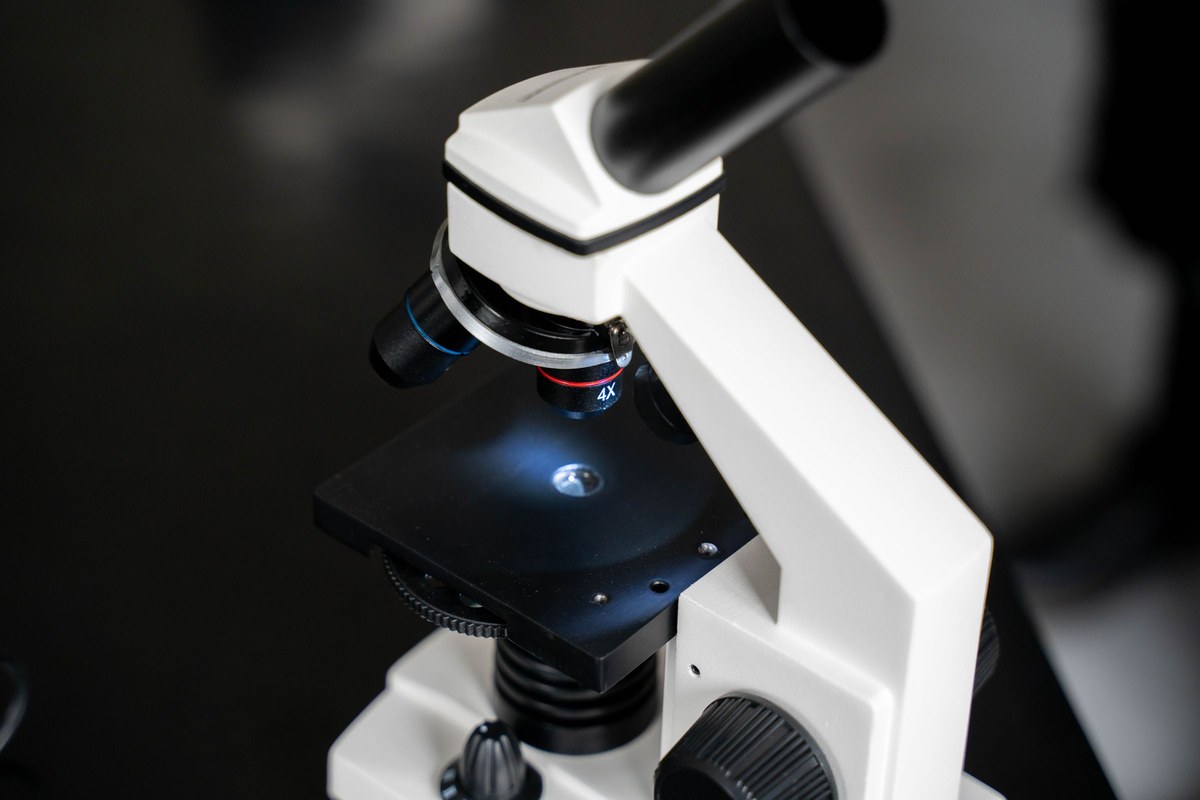
The M2 combines monocular viewing, dual LED illumination, cord-or-battery power, smartphone capture, experiment supplies, and a carrying case for learners and hobbyists. The M1 adds a binocular head, four achromatic objectives, Abbe condenser, mechanical stage, and coaxial controls for advanced students and more demanding routines.
The Wevision lineup is growing: More microscope models are coming soon. Check back for new options.
Explore Wevision microscopes
Find the right microscope for your next observation
Visit the Wevision web store to explore current microscope models for learning, laboratories, classrooms, and hands-on discovery.
Visit the Wevision web store